
 Enodo Untangled
- National People's Congress opens in March with economy on the agenda
- Security concerns, including financial and social stability, to top growth
- Belt-tightening and centralisation of debt workouts expected in 2024
- Foreign investors to see little encouragement
Security, not growth, will be central to the economic agenda laid out at China's annual National People's Congress, which opens this month in Beijing.
The NPC is known for its pomp and ceremony. It also offers a prized glimpse into the policy goals – and occasionally, dissenting policy views – of the world's second-largest economy.
While this year's NPC is expected to address the usual financial concerns of local debt, the real estate crisis and systemic stability, the real theme will be the security focus which has distinguished Xi and his administration. For the first time, Xi's economic team is in the driving seat, after the resignation and subsequent death of former premier Li Keqiang, who represented a different faction of the ruling Communist party.
For investors in China who must navigate a terrain of slowing growth and rising anti-foreign rhetoric, the unfortunate reality is that very little will change in 2024.
The tone for this year was set at December’s Central Economic Work Conference (CEWC). That meeting’s readout acknowledged problems while emphasising the government’s long-established policy agenda as the solution.
Despite ‘insufficient demand, overcapacity’ and ‘weak expectations’ amid ‘numerous risks and hidden dangers’ the readout was optimistic that ‘favourable conditions facing China’s development outweigh the unfavourable factors.’ China must ‘adhere to high-quality development as the hard truth of the new era,’ it urged.
The CEWC called economic work the central task for 2024, while simultaneously pledging to ‘achieve a dynamic balance and mutual enhancement between development and security.’
This is the nub of the issue. Security, a core focus of Xi’s policy agenda since he took office in 2012, now dominates the country’s policy agenda.
‘Security’ is not just tighter control over internal and external threats. It is a comprehensive package – encapsulated in the country’s ‘Holistic National Security Concept’ – that covers financial, economic, and infrastructural security.
The economic policies required by a focus on security operate on a long-term, interventionist basis that is – in theory – immune to reaction to shorter-term volatility. The goal for immediate economic issues, such as the rolling crisis in real estate, is therefore to transition to better alignment with overarching security goals, rather than propping companies up for the sake of growth or investors.
The announcement of a GDP target is one outcome of the People's Congress that is usually eagerly followed by the investment community.
This year, the target is likely around 5% – neither so ambitious that it undermines messaging that growth is no longer paramount, nor so conservative that it stokes fears regarding the state of the economy.
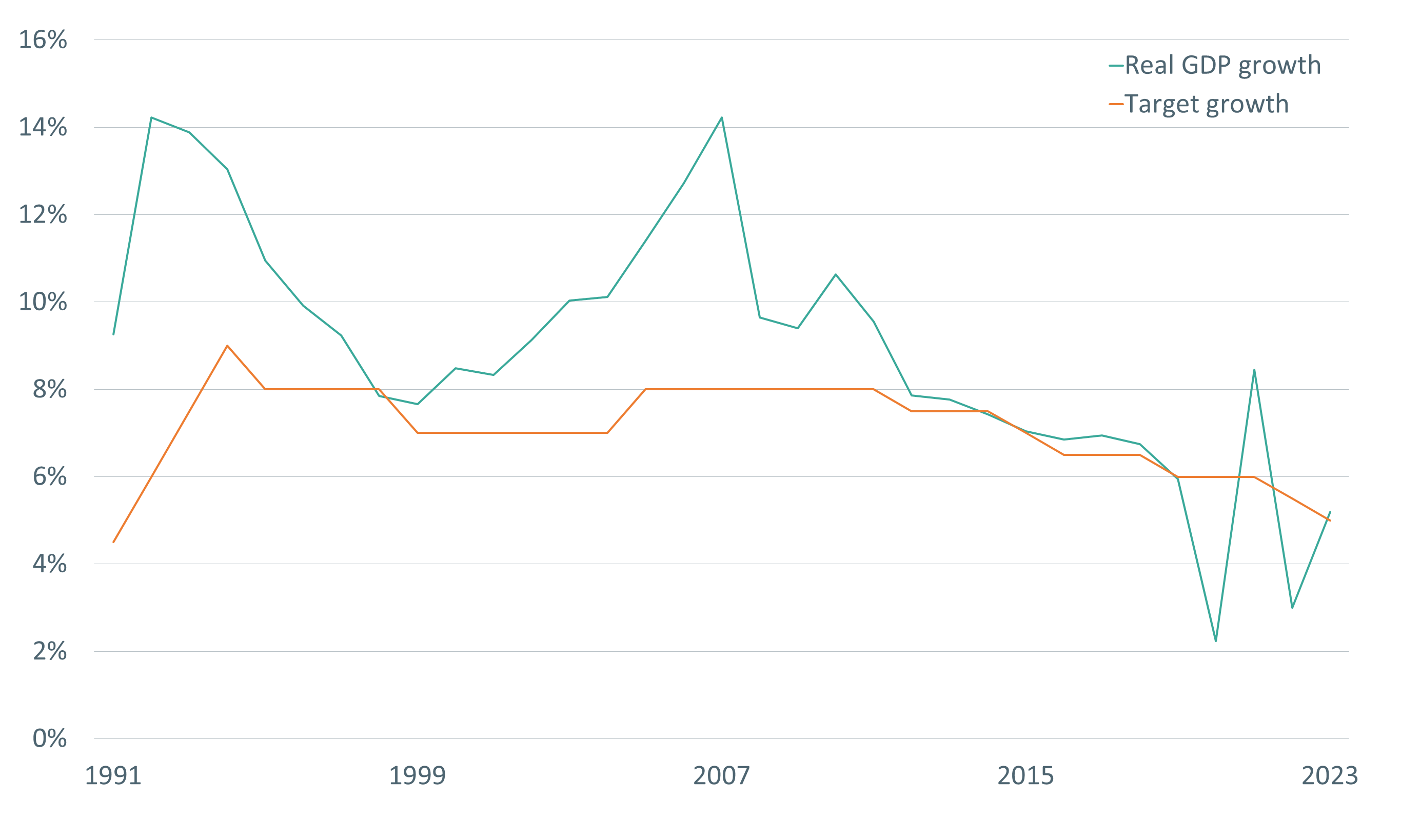

Still, this target is increasingly irrelevant as a measure of government intentions, and of the economy. This NPC is the first with Xi’s full coterie of allies in office, closing the small gap for implied dissent on the economy that existed under the former premier, Li Keqiang.
The government has fixed its economic priorities, and they are not those of investors.
Inside the Black Box
Investors have been at a loss to understand why the government is so complacent about the country’s economic woes. Why, for instance, did Beijing spawn the debt crisis in the real estate industry by introducing the three red lines on property financing? Why has it adhered so closely to Xi Jinping's mantra that houses are for living in, not for speculation, even as declining prices worsened the crisis through 2023?
The answer is security. Inflated property prices and indebted property developers were not just economic threats to be managed by a disinterested bureaucrat. The destabilizing financial practices of property developers were misaligned with overarching national goals to maintain social stability, and therefore national security.
Beijing sees the property sector adjustment as painful but necessary to combat these risks and ensure that the real estate industry is brought back in line.
Xi also views house price inflation through the prism of security. House price inflation increases the wealth divide between rich and poor, and increased inequality could cause pervasive social unrest that threatens the Party's hold on power. Simultaneously, Beijing would like to decrease household reliance on property as the main long-term investment asset and redirect households to capital markets instead.
Stimulus, of the kind unleashed to combat the 2008 Global Financial Crisis, implies a retreat from Xi's core politico-economic program and is therefore out of the question. Occasional compromises may occur where social stability is at risk. But Xi’s emphasis on this all-encompassing concept of national security means the government will not retreat into reflating old bubbles for short-term economic gain.
Investors will have to adjust to a new normal of security-led development, where economic issues are resolved through a much slower process of adjustment – and without any guarantee of ultimate success.
Defusing Risks
A major NPC priority will be redressing risks through increased central oversight. Indeed, the government’s emphasis on preventing financial risk has grown in recent months.
At the Central Financial Work Conference in November, Xi stated that ‘preventing financial risks must be the eternal theme of the financial sector.’ In January, Xi introduced the concept of ‘Financial Development with Chinese Characteristics,’ reiterating the importance of strong financial supervision, and advising that the ‘systematic project’ of financial regulation requires greater coordination between government bodies responsible for its oversight.
As is typical of such speeches, hard details were scarce. That task falls to the National Administration of Financial Regulation (NAFR), established at last year's NPC.
The NAFR spent last year focused on reforms at the central level. This year it will move on to more intractable issues at the local level.
In January, the NAFR announced its priorities for the year. All were responses to well-known issues. Reforms to small and medium-sized financial institutions may mean consolidation of regional banks with poor performance. This process began in 2022, according to the PBoC’s 2023 Financial Stability Report.
The NAFR will also seek to limit institutions such as insurance companies to their intended business scope, after many became participants in the shadow-banking system by issuing wealth management products. Prevention and resolution of local debt risks, supported by ‘market-oriented’ debt restructuring, will ensure continued focus on one of the economy’s most intractable issues – bad credit at the local level.
Belt-tightening 过紧日子
The phrase – 过紧日子 – appeared in the state media with increasing frequency even before its inclusion in the CEWC’s readout. Government departments are being conditioned to function within significantly tighter budget constraints.
Belt-tightening has emerged as a key government priority.
The provinces have already prepared. Belt tightening was the headline message at the provincial congress in Guizhou, one of the country’s most indebted provinces. Governor Li Haibin warned that ‘not a penny can be spent indiscriminately… we must punish profligate and wasteful behaviour, and instead use our limited funds on development and the people.’ His speech was reproduced in the national media,
The most obvious result is cancelled infrastructure projects. The State Council in January ordered 12 provinces to delay or halt infrastructure construction projects where under half of planned investment had been completed. It also rejected applications for new subway lines in provincial cities Harbin, Kunming and Baotao, on the basis that the cities have not met the required debt ratio requirements, Yicai reported in February.
These cancellations suggest that the government does not want to fall back on indiscriminate infrastructure investment to prop up economic growth. But Beijing is unlikely to abandon the investment policy lever completely.
Instead, the focus will be on digitalizing the economy and developing higher value added manufacturing.
Targeted Support
This doesn’t mean the government will not spend. We expect a higher deficit target as well as more off-budget debt spending. Last year's target of a deficit of 3% of GDP was (unusually) revised up to 3.8% in October.
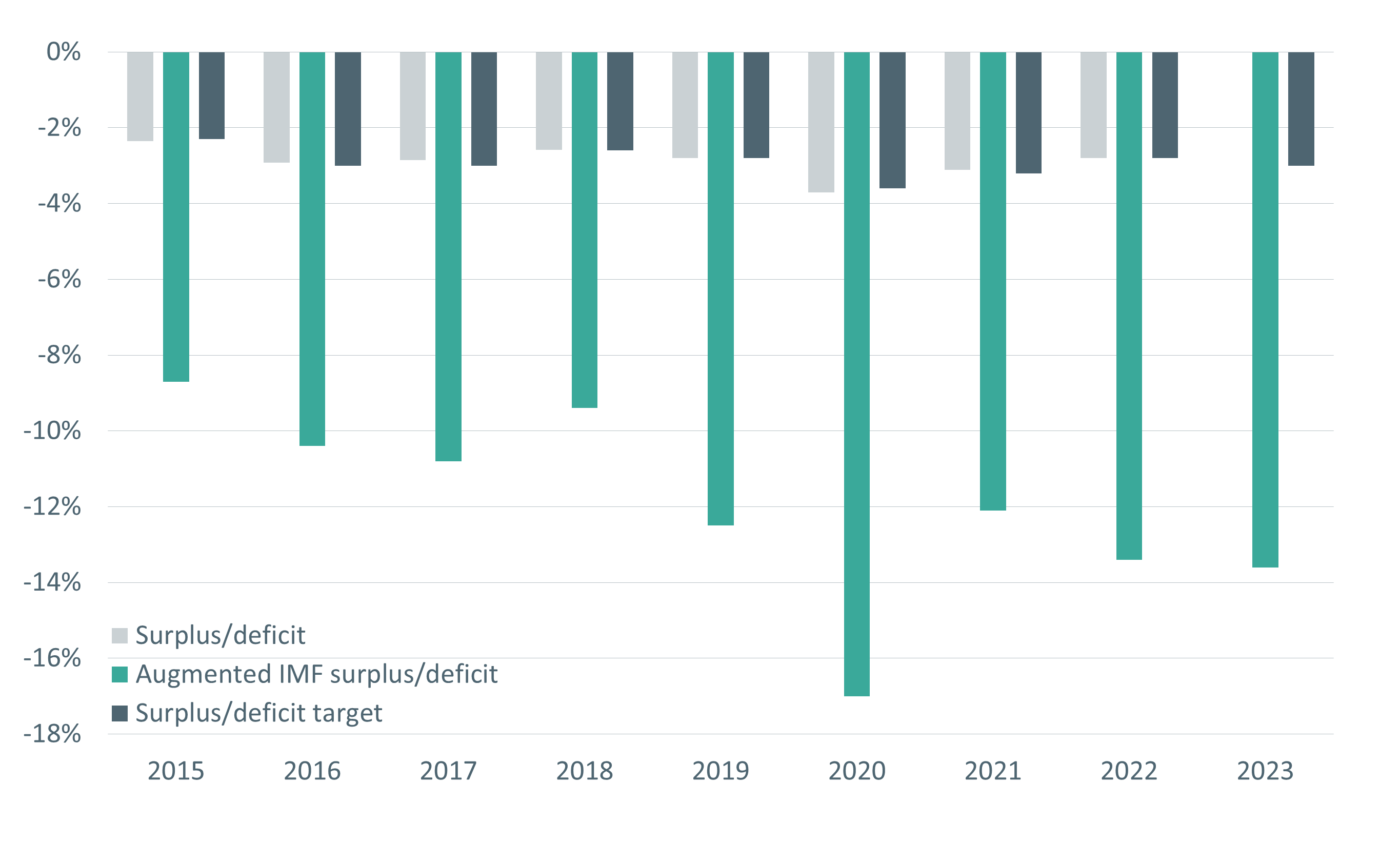
Fiscal support will be targeted to help smooth China's difficult transition to higher-quality growth.
The CEWC pledged to ‘reasonably expand the scope of local government special purpose bonds (SPBs)’ in support of national strategic tasks. At the last Politburo meeting in February, Beijing reiterated that ‘proactive fiscal policy must be appropriately intensified [and] the quality and efficiency of fiscal policy should be improved’.
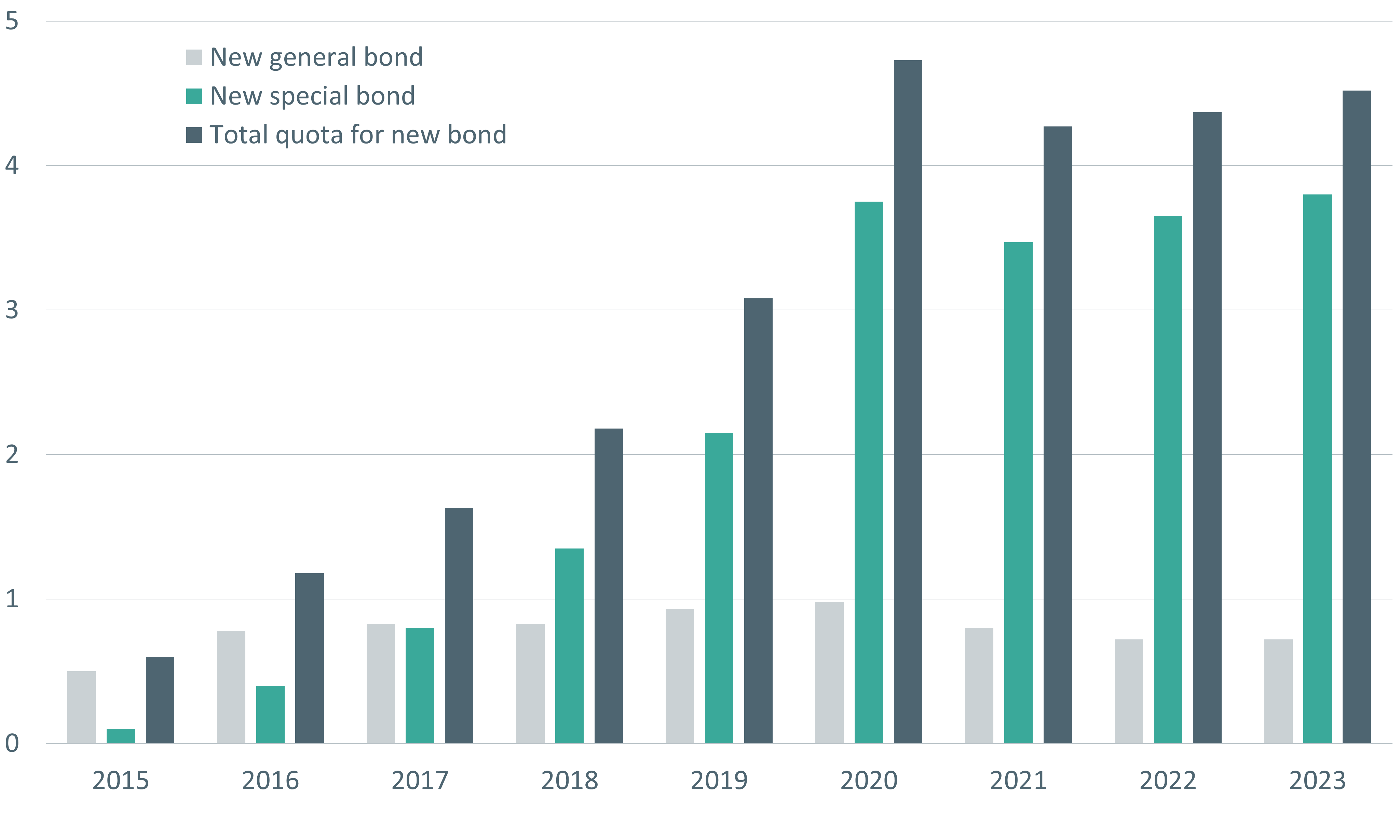
We expect the NPC will announce a higher SPB target than last year. More of these bonds are likely to be used to stabilise small lenders impacted by the property crisis, and prevent local liquidity issues from turning into a systemic problem.
Resistance to bailing out real estate companies will not change. But funding will also be available for a select list of property developers considered to be at lower risk of default. In January, the housing ministry launched Project Whitelist, under which city governments recommend residential housing projects to banks for financial support.
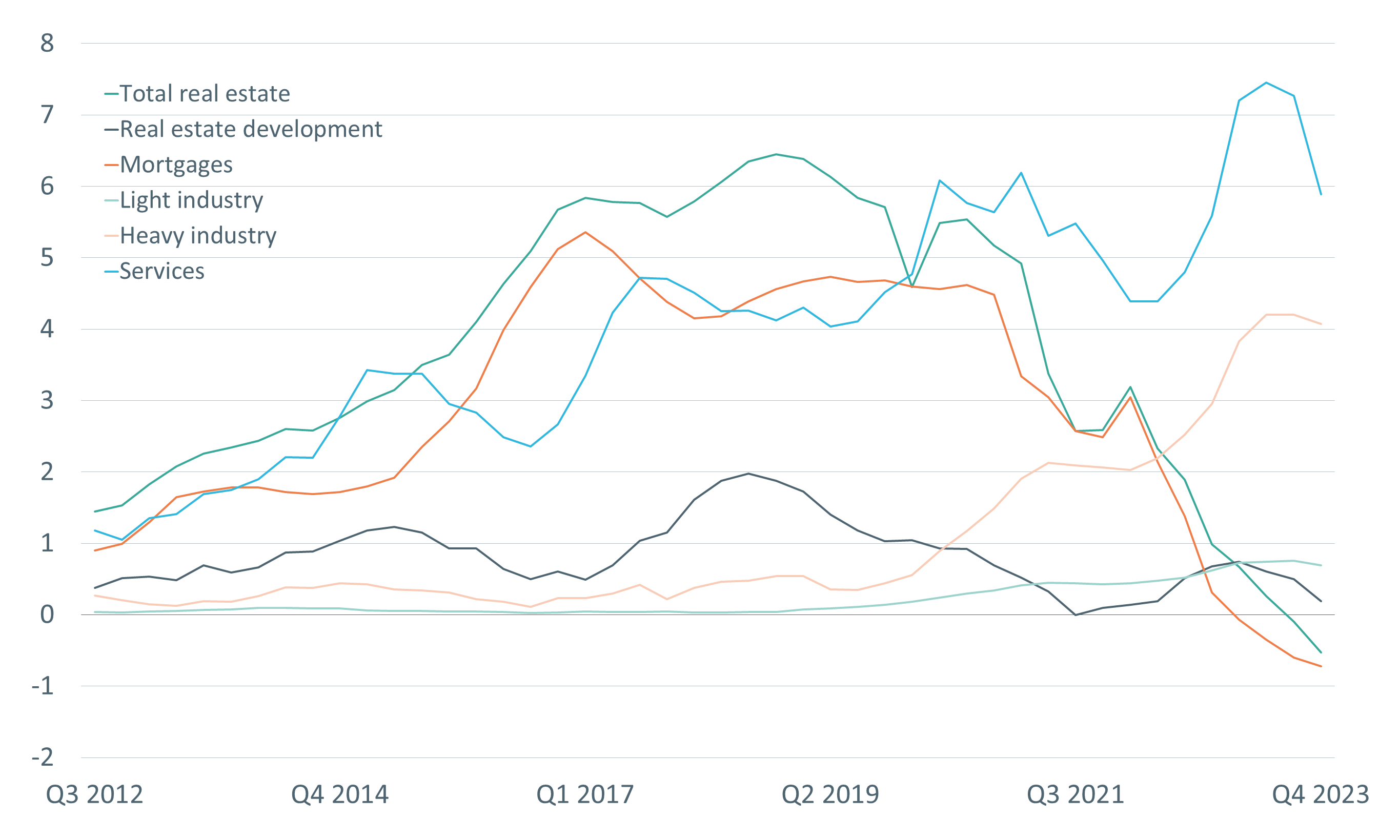
A reported Rmb123.6bn has already been approved for the project. Some projects under the scheme are reportedly adjusted repayment arrangements, indicative of the conservatism that will prevail in funding. Another key priority is support for affordable urban property construction for lower-income families, as part of a long-term plan for a dual housing market.
The NPC may offer support for the country’s ailing stock market, but details will be scarce.
The so-called 'national team' of powerful asset management companies has again been called on to support the equity market with direct purchases. Funding will likely be made available to signal to retail investors that the government has not forgotten them.
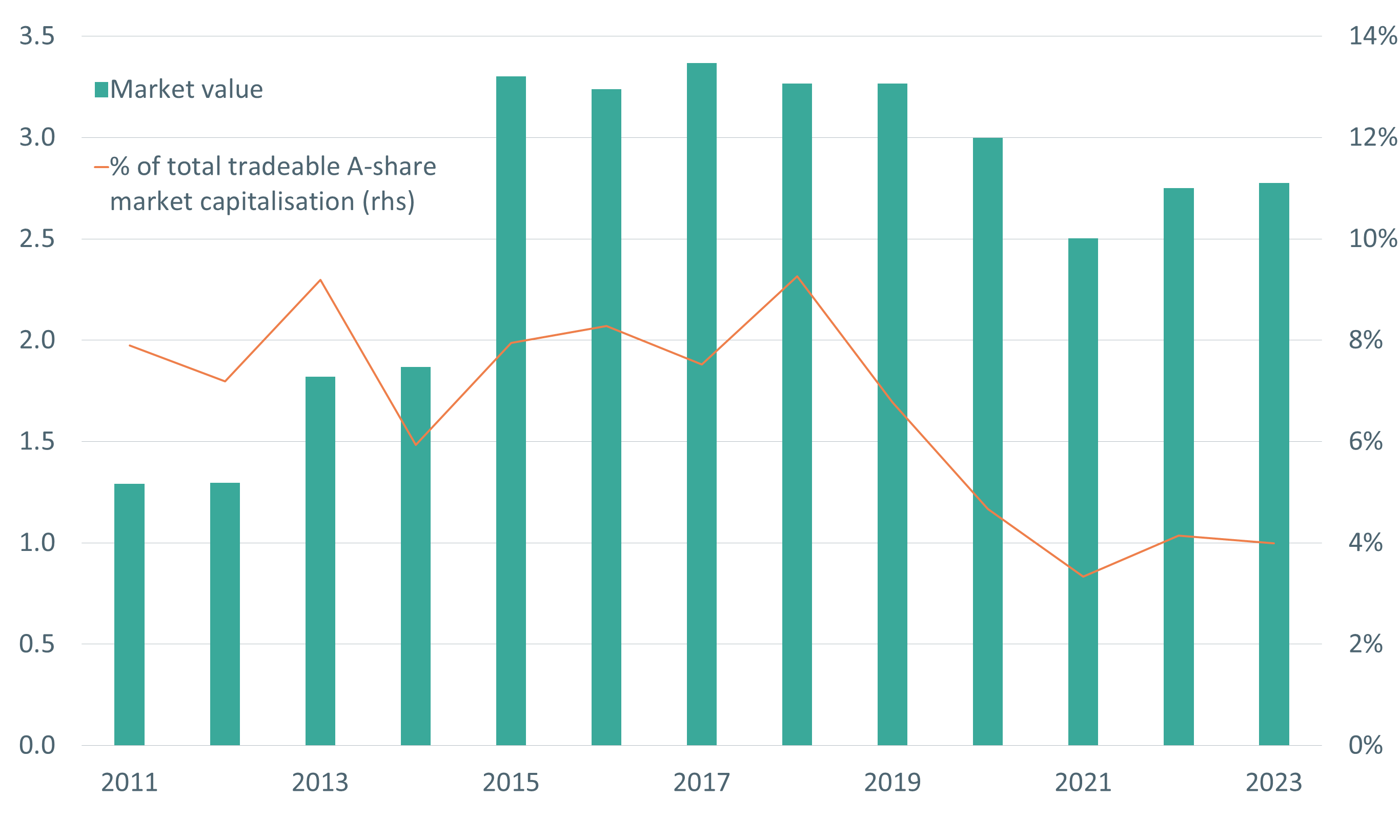
No doubt the NPC will also offer the usual sedatives for private business, pledging greater fiscal support without detail. But changing the incentive structures that make banks reluctant to lend to private businesses takes more than a paragraph in the NPC work report.
Although regulatory attitudes to private business have softened in recent months, the spectre of previous campaigns looms large. And private entrepreneurs and investors know that they will be sacrificed if their expansion conflicts with the government’s focus on security.
Made by China
Solving financial risks and short-term fiscal fixes cannot itself produce sustainable new growth. For that, Xi has staked the economy’s future on indigenous innovation in high-tech industries – a plan once known as Made in China 2025. While the name has gone, the plan’s importance has only increased.
The NPC will once again underline indigenous innovation in high-tech industries central to the government’s development agenda.
Speaking to the Politburo on February 6, Xi stated ‘high-quality development is the absolute principle of the new era… we must accelerate the construction of a modern economic system and promote self-reliance in high-level science and technology.’ Even government statements on the need to increase demand are now framed within the need for industrial upgrade, with consumers encouraged to purchase goods, such as electric vehicles, that have come to form the core of China’s industrial policy.
The industrial policy record is mixed. But 'security' mandates a doubling down on indigenous technological innovation, regardless of waste.
For semiconductors and chips, China has managed to weather the impact of US restrictions better than expected, but it is not close to replicating more advanced production nodes. Real advances have been made in electric vehicles and solar panels, but industrial development is riddled with overcapacity and wasted investment. The NPC will offer insight into how the government seeks to deal with these issues.
Beijing has shown signs of moving against overcapacity. Last October, Vice Minister of Industry and Information Technology Xin Guobin pledged to take ‘forceful’ measures against blind construction of new EV projects and ‘disorderly competition behaviour.’
The NPC will likely reinforce this message of consolidation of emerging industries, although how this translates into actual policy is uncertain.
Another way of dealing with overcapacity is exporting it. The NPC is unlikely to make this point very explicit, considering its controversial nature. But rather than cut jobs and risk increased public discontent, incentivising exports will likely be a major economic theme for 2024.
Yet Xi is unlikely to lose time worrying about overcapacity when China has not yet achieved the technological breakthroughs required to resist international pressure. The prospect of a US election in which both sides will outcompete each other to take a hawkish attitude on China, and its access to US technology, will have confirmed the validity of this position.
The recent establishment of a Semiconductor Leading Small Group, chaired by Politburo Standing Committee Member Ding Xuexiang, to create an indigenous ecosystem that avoids US technology is indicative of the likely centralised approach. Increased financial support for Chinese companies to use local suppliers is also likely, though details will be vague.
For investors, indigenous innovation drive offers little optimism.
Any promised productivity gains remain far in the future. Exporting deflation will upend competitors in developed markets and fan the flames of future trade wars. And neither will negate the impact of the vast amounts of wasted investment that could have been used to support private enterprises or provide more meaningful support for individual consumption.
National Security
The extent to which more explicit themes of security will feature at the NPC is unclear. The work report is Premier Li Qiang’s show, and his focus is not security. Cai Qi, director of the Central Committee General Office and member of the Politburo Standing Committee, has emerged as the arbiter of the demands of security versus the necessities of the economy.
Regardless, 2024 will see an intensification of security legislation and scrutiny of foreign companies.
The prominence of the Ministry of State Security’s newly established WeChat account, which publishes essays on security issues, is a testament to security’s central role in public discourse. One essay critiqued allegations that the country’s heightened focus on national security has worsened the business environment as ‘foreign forces’ smearing China.
Few will have bought in. The ambiguities surrounding security legislation are too vast, and the horror stories of company raids and detained executives will take a long time to fade. With the recent broadening of the state secrets law to include ‘work secrets’, foreign investors must be aware that the grey areas around their China operations are expanding.
This need for increased operational caution wastes time, increases compliance costs and creates a general atmosphere of negativity that will throw a pall over foreign companies’ willingness to take risks in China’s opaque market. Investors should be keenly focused on how this impacts them, even if they don't invest directly in China.
Conclusion
This year's NPC will provide few surprises, as 2024 will be a year of consolidation for the security-led development agenda that has been signalled since Xi Jinping began his third term in 2022.
Investors will find little to cheer. Growth will be sacrificed to security. Businesses will come under increased pressure to comply with security goals. The government will repeat old rhetoric about an ever-wider door, while intensifying policies that disadvantage private business and drive foreign investment away.
Long-term, the intention is stronger economic foundations – fewer bubbles, less financial instability and more productivity growth. But the success of these initiatives remains distant, while priorities like indigenous innovation will increase geopolitical tensions and create new challenges for investors.
At the end of the day, 'security' is the real central message likely to come from this NPC.